The short answer
For a short, car-free first visit, choose the Pearl District or NW 23rd for streetcar access and an easy walk into the central city. For three nights or more, choose an east-side neighborhood: Hawthorne & Belmont for food and shops, or Central Eastside & Buckman if you want a hotel near east-side nightlife. Sellwood-Moreland suits families who value quiet streets and river paths. Compare exact totals for your dates before deciding; Portland lodging prices change by stay length, home size and events.
Visiting between October and February? Portland in fall and winter covers the weather by month, how the holiday season runs, and when to book.
Which Portland area fits your trip
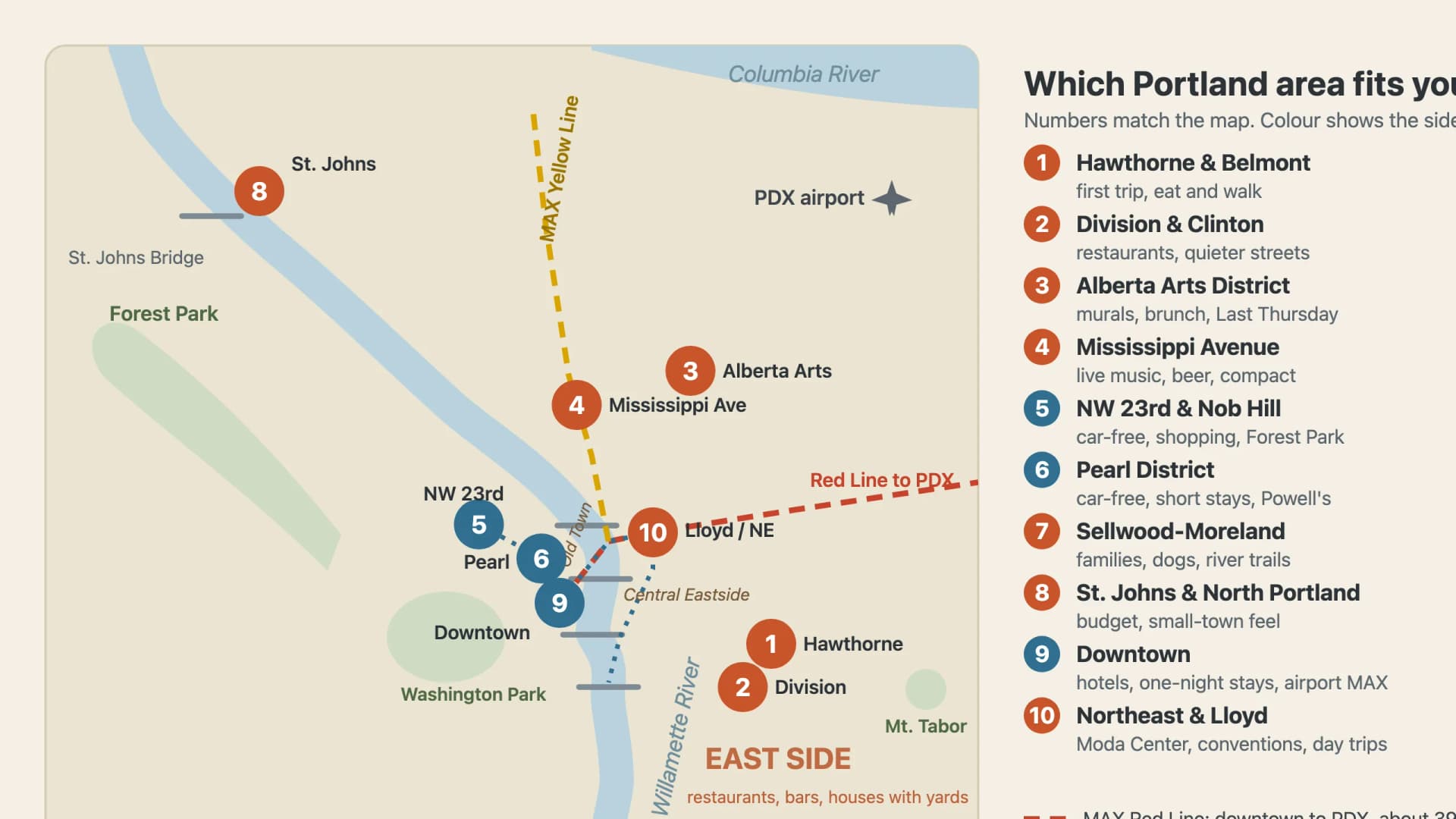
Start with length of stay, then choose the street you want outside your door. Pearl and NW 23rd are the easiest short, car-free bases. For a longer visit, Hawthorne, Division, Alberta or Buckman put more east-side meals and neighborhood walks close to home. The table makes one recommendation for each area and names the trade-off that should change your mind.
| Area | Choose it for | Best trip length | Getting around | Main trade-off |
|---|---|---|---|---|
| Hawthorne & Belmont | First trip focused on food and shops | 3+ nights | Frequent bus or rideshare | No rail at the door |
| Division & Clinton | Restaurants with quieter side streets | 3+ nights | Bus or rideshare | Less nightlife on the block |
| Alberta Arts District | Murals, brunch and an independent commercial strip | 3+ nights | Bus or rideshare | Slower cross-town trips without a car |
| Mississippi Avenue | Live music and bars on one compact strip | Weekend | Bus; Yellow Line west on Interstate | Smaller area to wander |
| NW 23rd & Nob Hill | Car-free shops, dining and Forest Park access | 1 to 3 nights | Streetcar; walk or bus downtown | Parking takes planning |
| Pearl District | Shortest car-free introduction to central Portland | 1 to 2 nights | Walk, streetcar and nearby MAX | Less convenient for repeated east-side evenings |
| Central Eastside & Buckman | An east-side hotel, river path and nightlife access | 1 to 3 nights | Streetcar, bus, bike or walk across the river | Industrial blocks vary block by block |
| Sellwood-Moreland | Families, dogs and river paths | 3+ nights | Bus or car | Farther from central nightlife |
| St. Johns | Cathedral Park and a self-contained main street | 3+ nights | Line 4 bus; no MAX station | Longest trip to inner SE |
| Overlook or Kenton | North Portland with Yellow Line access | 2+ nights | MAX Yellow Line | Not the same walkable center as St. Johns |
| Downtown | Full-service hotels, cultural venues and airport rail | 1 to 2 nights | MAX, streetcar and buses | Quieter dining streets than the east side |
| Northeast & Lloyd | Moda Center and convention access | Event stay | MAX and streetcar | Lloyd is practical rather than atmospheric |
East side or west side: the first decision
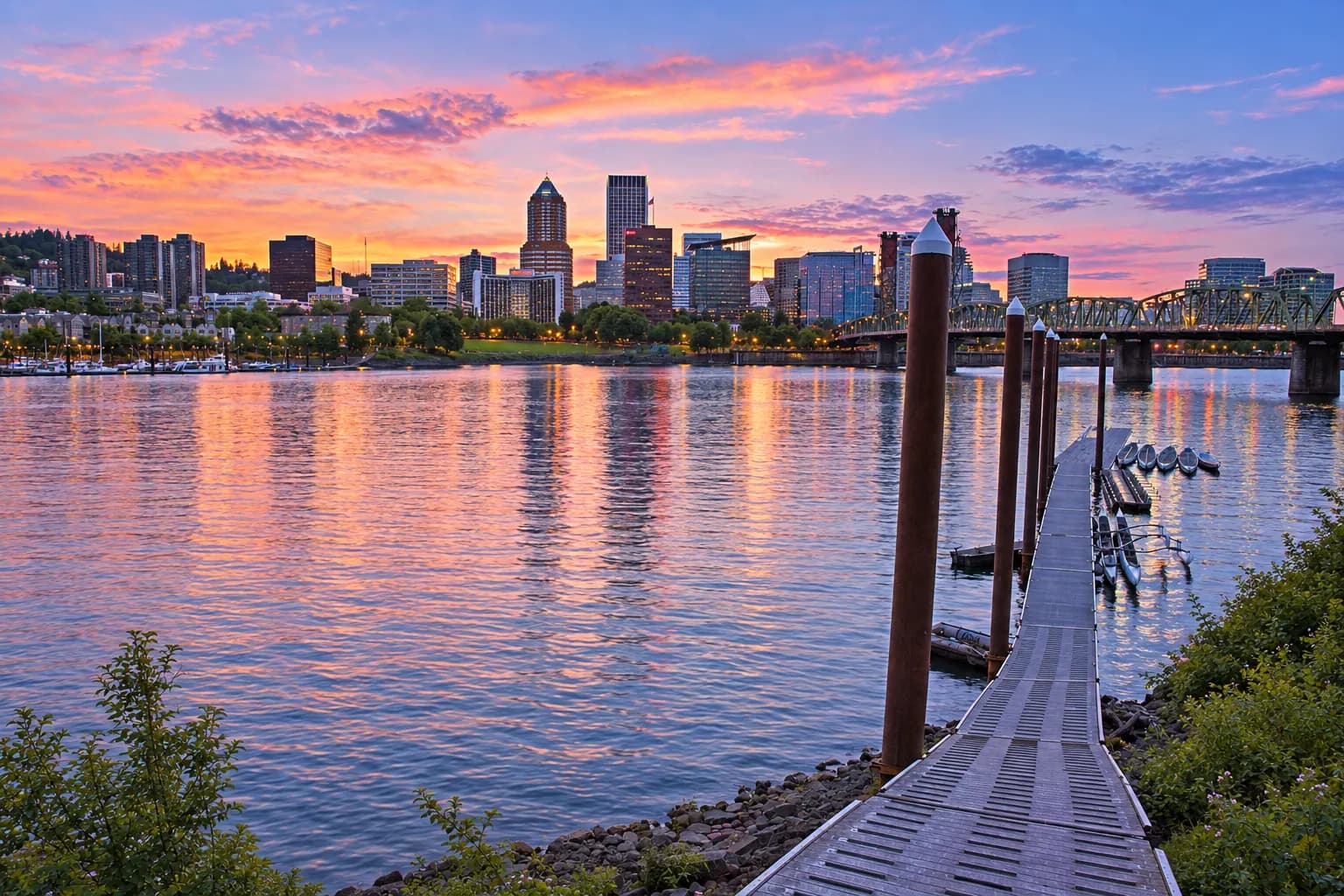
The Willamette River divides the central city. Downtown, the Pearl District and NW 23rd sit on the west side with the densest hotel and streetcar coverage. The east side holds many of the restaurant, bar and music districts, usually in lower-rise buildings and residential neighborhoods. For one or two nights without a car, west-side convenience usually wins. With three nights or more, an east-side base cuts down the repeated cross-river trips to dinner.
Addresses tell you where you are. Every street name carries a prefix: N, NE, NW, SE, SW or S. The city added S (South Portland) in May 2020; the other five date from 1931. "SE Hawthorne" and "NW 23rd" are on opposite sides of the river, so check the prefix before you assume a restaurant is near your rental.
Hawthorne & Belmont: best for a first trip and for eating well
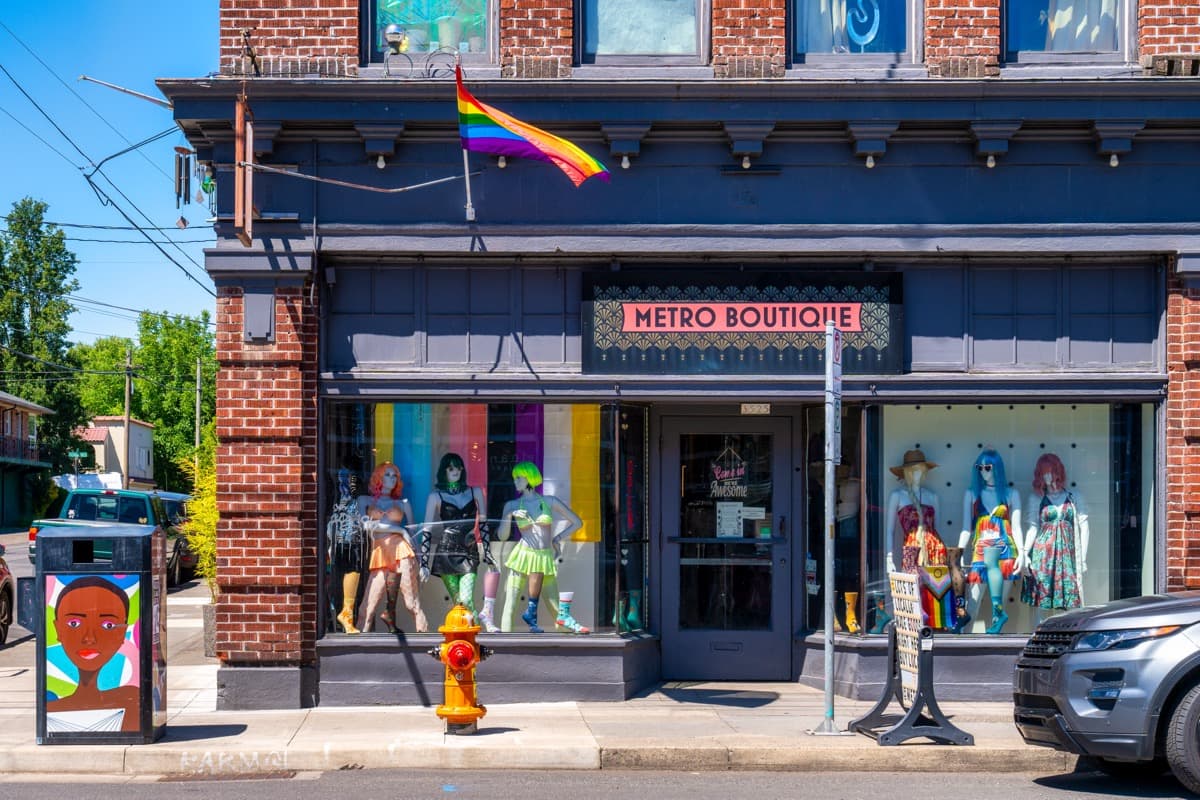
If you have a few days and want to eat and walk, stay here. Hawthorne Boulevard is a long commercial strip of independent restaurants, vintage shops, record stores and bookshops where you can walk for half an hour without running out of things to look at. Belmont runs parallel a few blocks north and is quieter, with neighborhood coffee and brunch. The residential streets between them are tree-lined and calm, which is where most of our homes here sit.
The trade-off is rail: there is no MAX or streetcar here. The 14 bus runs along Hawthorne to downtown, and a rideshare across the river is short. Mt. Tabor Park, a 176-acre extinct cinder cone with reservoirs and city views, is at the east end of the strip.
Pros
- ✓The longest run of independent restaurants, bars and shops in the city
- ✓Quiet residential side streets a block off the boulevard
- ✓Bus 14 straight to downtown along Hawthorne
- ✓Mt. Tabor Park for a morning walk with views
Cons
- ✗No MAX or streetcar
- ✗Hawthorne Boulevard is loud on weekend evenings
- ✗Very few hotels, so it is rentals or nothing
Insider Tip
Hawthorne is where we send first-timers who ask "where would you stay?" Browse Hawthorne & Belmont rentals.
Portland, Oregon
Color Splash - Fast WiFi - Heart of Hawthorne
Portland, Oregon
3BR/2BA • Hawthorne Penthouse • Top-Floor Retreat
Portland, Oregon
Bright + Walkable | Vintage Hawthorne Charm
Division & Clinton: best for restaurant density on quieter streets
Division Street, half a mile south of Hawthorne, is the denser restaurant corridor: destination dining such as Ava Gene's packed into a few blocks, with newer places opening every season. Clinton Street, one block south, is residential and quiet, and the Clinton Street Theater at 2522 SE Clinton still screens The Rocky Horror Picture Show late on Saturday nights. Ladd's Addition, the diagonal-street historic district, is a short walk northwest.
Stay here rather than Hawthorne if you want to sleep on a quiet street and walk to a serious dinner. Stay in Hawthorne if you want bars and shops on your walk home. The two are close enough that plenty of guests never decide.
Pros
- ✓Densest restaurant corridor in the city
- ✓Quieter side streets than Hawthorne
- ✓Unmetered residential parking on most blocks
Cons
- ✗Bus only; no rail
- ✗Less nightlife than Hawthorne or Alberta
- ✗Newer apartment buildings along Division change the feel block by block
Portland, Oregon
Color Splash - Fast WiFi - Heart of Hawthorne
Portland, Oregon
3BR/2BA • Hawthorne Penthouse • Top-Floor Retreat
Portland, Oregon
Ground-Floor Studio - Prime Hawthorne Location
Portland, Oregon
Bright + Walkable | Vintage Hawthorne Charm
Alberta Arts District: best for murals, brunch and Last Thursday
Alberta Street is the most visually interesting street in Portland: murals on nearly every building, galleries, food carts and a commercial strip that stays lively without feeling crowded. The event is Last Thursday. On the last Thursday of June, July and August the street closes to traffic and fills with artists, performers and vendors. The rest of the year it carries on indoors in the galleries, so an October visit still gets a version of it. Weighing it against the other east-side streets? See Alberta vs Hawthorne vs Mississippi.

Brunch is the local sport here (Pine State Biscuits), and Salt & Straw has a scoop shop on the strip. The surrounding streets are classic Portland: Craftsman houses, big trees, front porches. It suits travelers who want to feel like they live here for a week.
Pros
- ✓Best street art and gallery scene in the city
- ✓Last Thursday street fair, June to August
- ✓Walkable strip with quiet residential streets around it
Cons
- ✗No MAX or streetcar: bus or rideshare
- ✗Some blocks switch from commercial to very quiet residential within a hundred yards
Insider Tip
Most rentals near Alberta are houses suited to families or groups. Enter your dates and guest count before comparing them with smaller apartments elsewhere. See Alberta Arts District rentals.
Mississippi Avenue: best for live music and beer on one walkable strip
Mississippi Avenue is compact: a few blocks of North Portland where the walk from Prost!, the German beer hall, to Mississippi Studios, one of the best small music venues on the West Coast, takes five minutes, with breweries, a food cart pod and a dozen bars in between. Step one block off the avenue and you are on quiet bungalow streets with big yards.
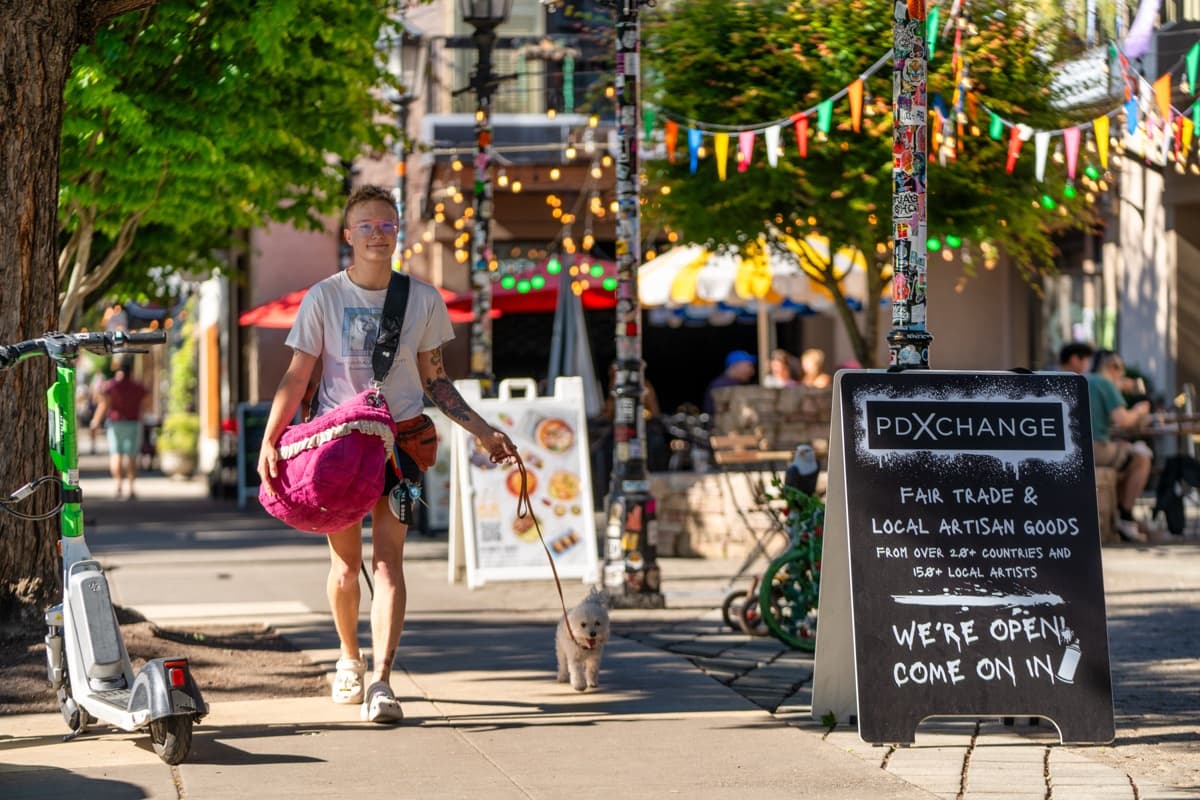
It is smaller than Hawthorne, so there is less to wander, but it is the best base for a music-and-beer weekend, and Alberta is a short bus ride east. The MAX Yellow Line runs on Interstate Avenue a few blocks west if you want rail to downtown.
Pros
- ✓Mississippi Studios for live music most nights
- ✓Breweries and a food cart pod on one walkable strip
- ✓Quiet residential streets a block away
- ✓Easy I-5 access for day trips north or to the coast
Cons
- ✗Very few hotels; rentals are the option
- ✗A short strip, so less to explore on foot than Hawthorne
Insider Tip
Mississippi sits between Alberta and the Yellow Line, which makes it a good central North Portland base. Browse Mississippi Avenue rentals.
Portland, Oregon
Historic Mississippi - Live Music & Local Shops
Portland, Oregon
The Laid-Back Loft | Mississippi Ave
Portland, Oregon
Luxury 2BR Mississippi Home - 95 WalkScore
Portland, Oregon
The Art Deco Lounge | Mississippi Ave | Parking
NW 23rd & Nob Hill: best for a car-free trip with shopping and Forest Park
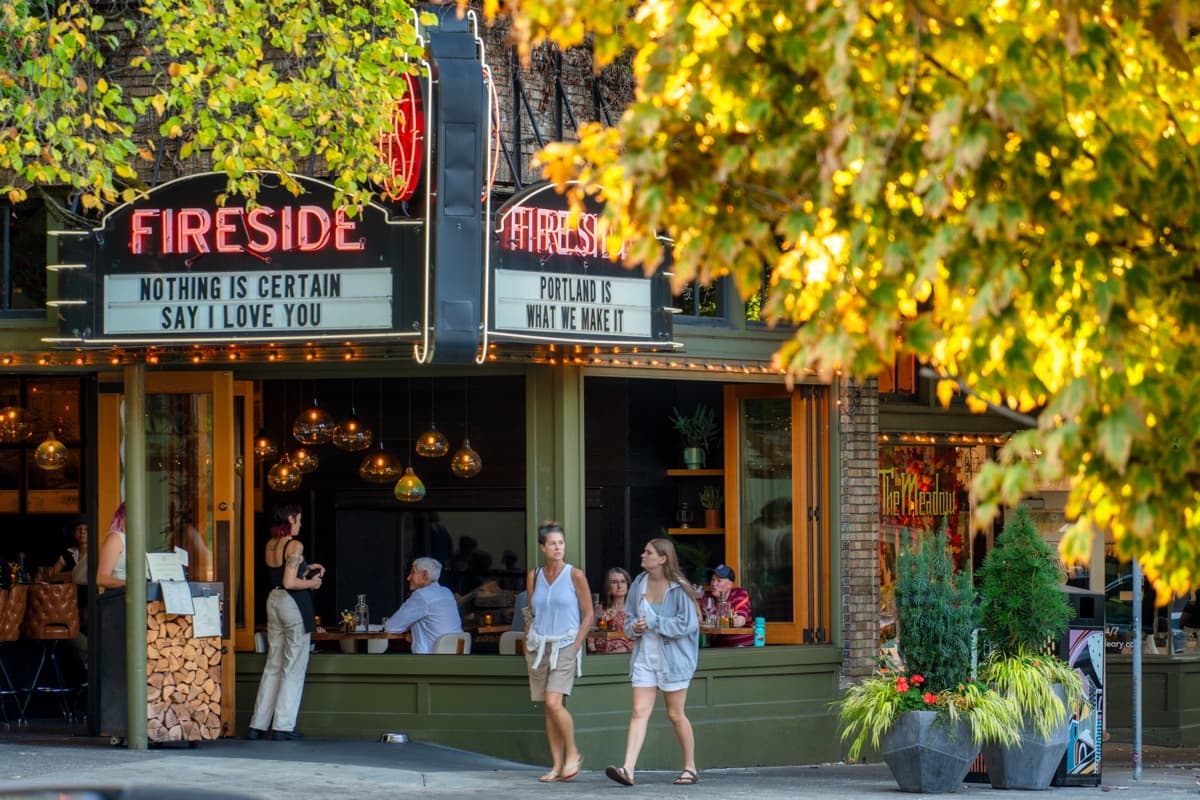
Northwest Portland, the Nob Hill and Alphabet District blocks around NW 23rd and NW 21st, is the polished neighborhood: boutiques, brunch, upscale restaurants and some of the prettiest Victorian and Craftsman streets in the city. A few blocks west the hills begin, and with them Forest Park: 5,200 acres and more than 80 miles of trails, so you can hike old-growth forest before breakfast and be back on NW 23rd for coffee.
The streetcar's NS Line begins at NW 23rd and Marshall and runs through the Pearl to downtown and Portland State, so this is a car-free base. Do not bring a car if you can help it: the Northwest Parking District has paid hourly parking and permit parking on most streets. Our Pomeroy building sits a block off NW 23rd with hotel-style suites and full kitchens; the rest of our NW homes are on the quiet streets within a five-minute walk of the avenue.
Pros
- ✓Streetcar from NW 23rd to the Pearl, downtown and PSU
- ✓Forest Park trailheads within walking distance
- ✓Most walkable shopping and brunch corridor on the west side
- ✓Beautiful residential architecture
Cons
- ✗Tightest parking in the city: permit zones and paid hourly parking
- ✗More visitors, fewer locals, than SE or Alberta
Insider Tip
If you are driving and staying in NW, book somewhere with a dedicated space or plan on circling. See Northwest Portland rentals.
Portland, Oregon
3BR - Sleeps 6 - Steps to NW 23rd - Fast WiFi
Portland, Oregon
2BR - Trendy NW 23rd - Walk to Cafes & Shops
Portland, Oregon
Luxury Living on NW 23rd Ave, Walk Score 99
Portland, Oregon
Bright & Stylish Alphabet District Suite | NW 23rd
Pearl District: best for short stays without a car
The Pearl is the most urban neighborhood in Portland: converted warehouses, galleries and restaurants on a walkable grid just north of downtown. Powell's City of Books, the world's largest independent bookstore, anchors the south edge at 1005 W Burnside and is open daily 10 am to 9 pm. Tanner Springs Park is the pocket of green in the middle. The streetcar runs through, and the downtown MAX stations are a short walk.
This is where hotels and rentals overlap most, which makes it the conventional first-timer answer and a strong choice for a short stay. On a longer trip centered on restaurants and neighborhood evenings, an east-side base usually reduces cross-river travel.
Pros
- ✓Powell's, galleries and the densest west-side dining
- ✓Streetcar and MAX: no car needed
- ✓Walk to downtown, the waterfront and events
Cons
- ✗Parking is paid, and many buildings are valet only
- ✗Borders Old Town, which has visible homelessness
- ✗More polished and chain-adjacent than the east side
Insider Tip
The Pearl works best for one or two nights close to the central city. For a longer stay, compare it with an east-side neighborhood using the full after-tax total for the same dates and guest count. Stay Portland has no homes inside the Pearl; see our homes near the Pearl, in Northwest Portland. Choosing between it and NW 23rd? Read Pearl District vs Nob Hill.
Sellwood-Moreland: best for families, dogs and quiet
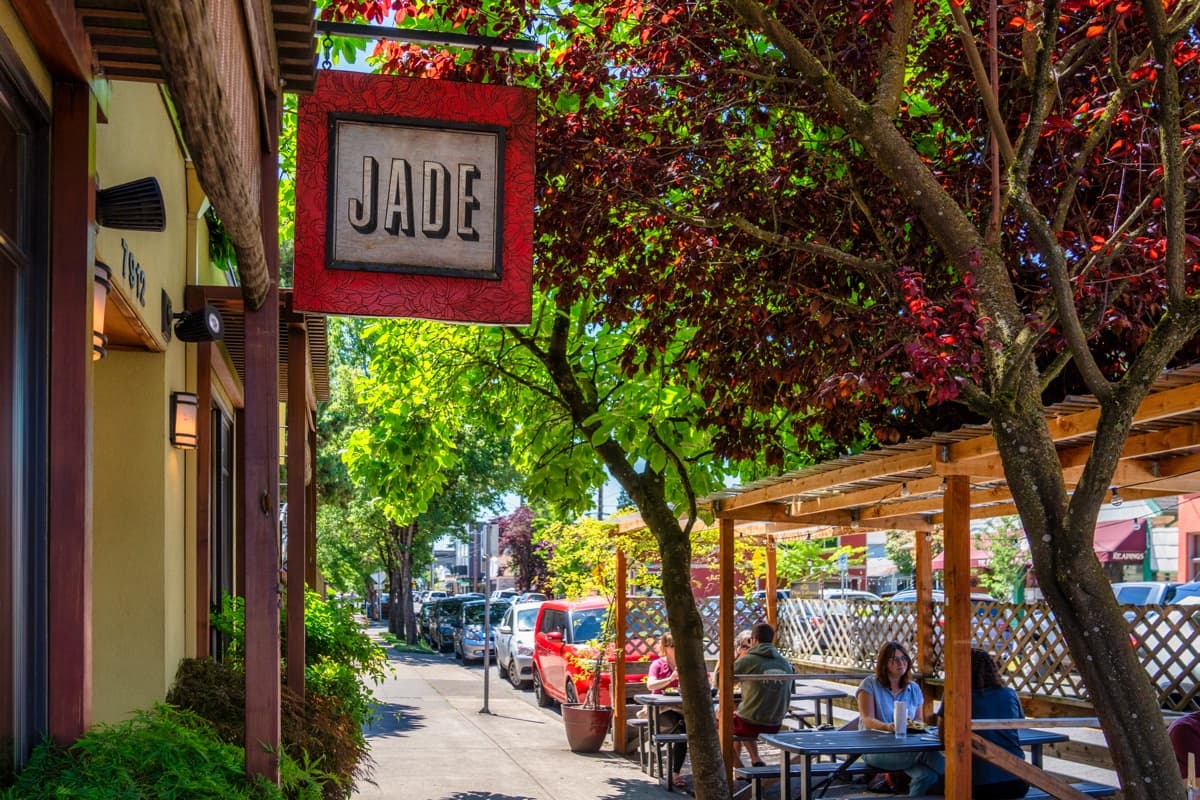
Sellwood-Moreland is the quiet one. Antique shops line SE 13th Avenue, Sellwood Riverfront Park sits on the Willamette with a dog off-leash area and a boat dock, and the Springwater Corridor, a former rail line turned paved trail, runs along the river for miles of flat walking and cycling. Families and dog-walkers outnumber bar-hoppers, and it still sits within a short drive of Hawthorne and Division.
Pros
- ✓Quietest area on this list
- ✓Riverfront park and the Springwater Corridor trail from the door
- ✓Unmetered street parking
Cons
- ✗Fifteen to twenty minutes from the SE restaurant corridors by bus or car
- ✗Little nightlife or late dining
Insider Tip
Sellwood-Moreland works well for families and guests traveling with dogs when the specific home has the space and yard they need. Use the map and full address to confirm the property is actually in the neighborhood before booking.
St. Johns & North Portland: best for budgets and a small-town feel
North Portland is a large area, and its districts should not be treated as interchangeable. St. Johns has its own main street, Cathedral Park and the St. Johns Bridge. Kenton centers on N Denver Avenue and has a MAX Yellow Line station. Overlook sits closer to the central city along N Interstate Avenue, also on the Yellow Line. Choose St. Johns for its self-contained neighborhood and bridge; choose Kenton or Overlook when rail access matters more.
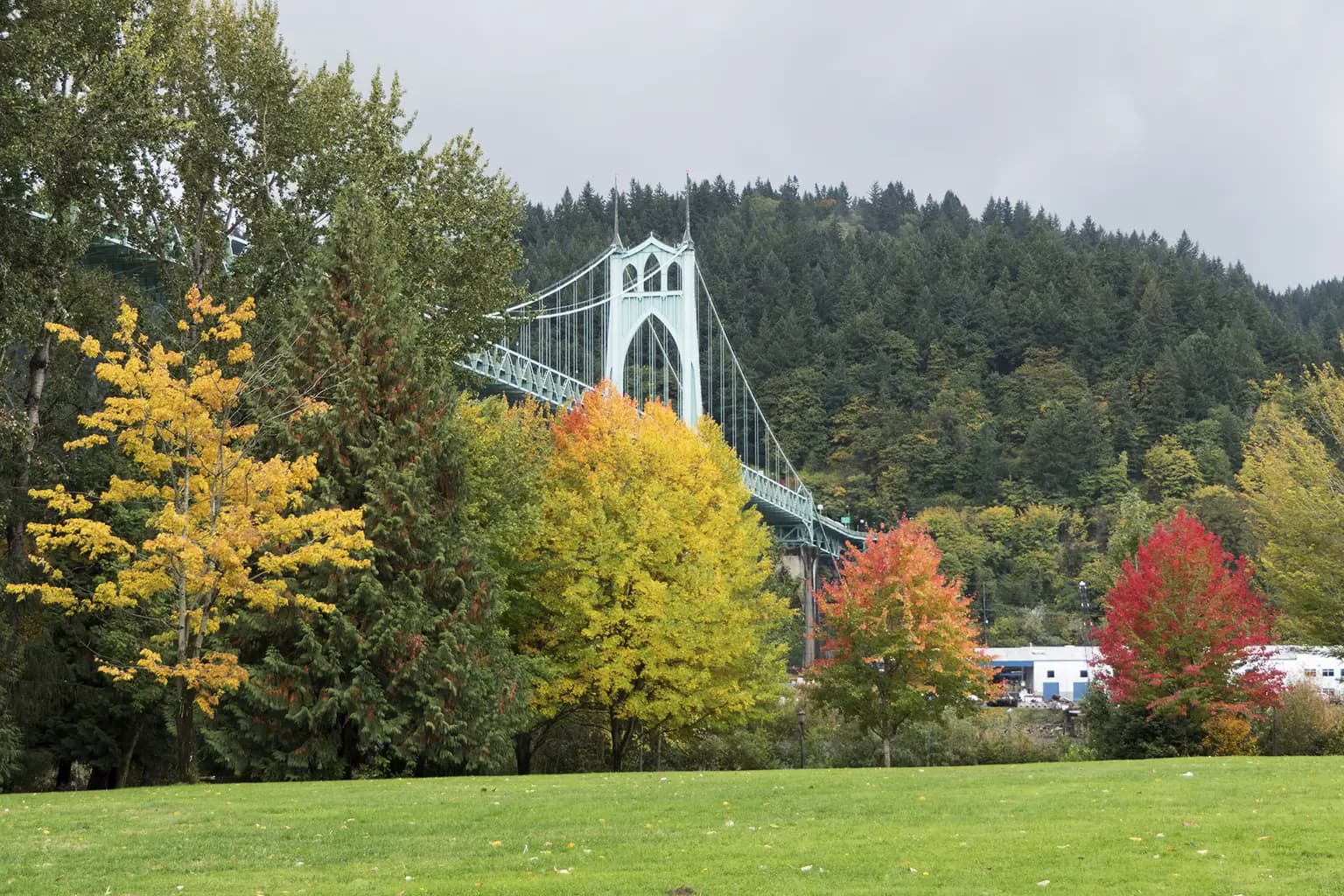
Photo: Bill Reynolds, Wikimedia Commons, CC BY 2.0
St. Johns does not have a MAX station. TriMet's frequent Line 4 bus connects St. Johns with North and Northeast Portland, the Rose Quarter, Union Station and the city center. The MAX Yellow Line serves Kenton and Overlook on the Interstate Avenue corridor. That distinction matters on a car-free trip: St. Johns feels more separate, while Kenton and Overlook make downtown trips simpler.
Pros
- ✓St. Johns main street, Cathedral Park and the bridge
- ✓Line 4 bus links St. Johns with the city center
- ✓Kenton and Overlook have MAX Yellow Line stations
- ✓Straightforward access toward Sauvie Island and North Portland parks
Cons
- ✗St. Johns has no MAX station
- ✗St. Johns is a long trip from the inner Southeast restaurant districts
- ✗Kenton and Overlook do not share St. Johns' main-street setting
Insider Tip
Search by the specific district rather than the broad “North Portland” label. Confirm the home's actual address and the nearest stop before booking, especially if you are choosing between St. Johns, Kenton and Overlook. Browse North Portland rentals.
Portland, Oregon
Luxury 3BR | Walk to Mississippi & Alberta
Portland, Oregon
Alberta Arts - 2BR - Prime Spot - Modern Vibes
Portland, Oregon
Alice in Wonderland Tiny House · The Caterpillar
Portland, Oregon
N Portland Condo - Walk to Food, Bars, Music
Central Eastside & Buckman: best for east-side hotels and an urban food-and-drink base
The Central Eastside is the close-in district opposite downtown; its northern portion overlaps western Buckman. The City of Portland defines Buckman from the Willamette River east to SE 28th, between East Burnside and Hawthorne, and describes the part west of SE 12th as industrial. That is why this area feels different from residential Hawthorne or Division: warehouses, venues and hotels sit beside working businesses rather than on a single polished shopping street. Buckman boundaries and parks.
This is the easiest place to reach east-side Portland by hotel. Jupiter NEXT is at 900 E Burnside and KEX is at 100 NE Martin Luther King Jr. Blvd. The A and B Loop streetcars serve the Central Eastside, while the Eastbank Esplanade runs 1.5 miles along the river with bridge connections to the west side. It works well for a short trip built around shows, bars and meals on both sides of the river.
Pros
- ✓Two east-side hotels with different room formats
- ✓Streetcar and bus connections through the central city
- ✓Eastbank Esplanade access
- ✓Closer to inner-eastside venues than a downtown hotel
Cons
- ✗Industrial blocks can feel sparse between destinations
- ✗Traffic and bridge approaches make some blocks noisy
- ✗Less residential than Hawthorne, Division or eastern Buckman
Insider Tip
Use the exact hotel or rental address, not “Central Eastside” alone, to judge the walk. The district stretches across busy bridges and industrial blocks; proximity to E Burnside, the streetcar or the river can change the experience.
Downtown Portland: best for hotels, one-night stays and the airport train
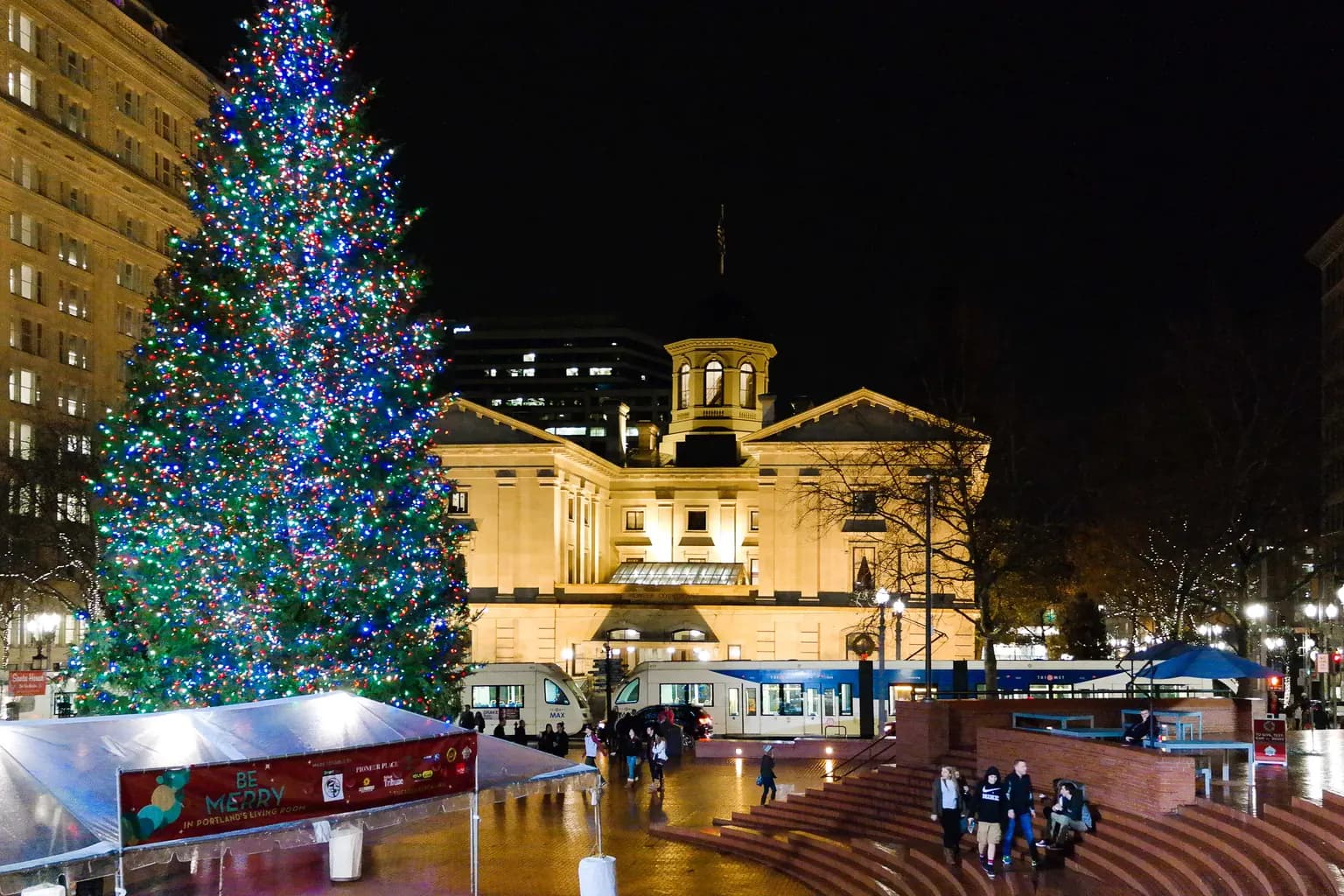
Downtown is the practical choice for cultural venues, full-service hotels and the densest transit network. Old Town/Chinatown occupies the northern end of the central city and has a different street environment from the South Park Blocks and Portland State area. Conditions can change block by block, so choose an exact hotel and review the route to the places you plan to visit rather than treating all of downtown as one experience. The PSU Farmers Market runs year-round at SW Park and Montgomery; check its official calendar for current hours.
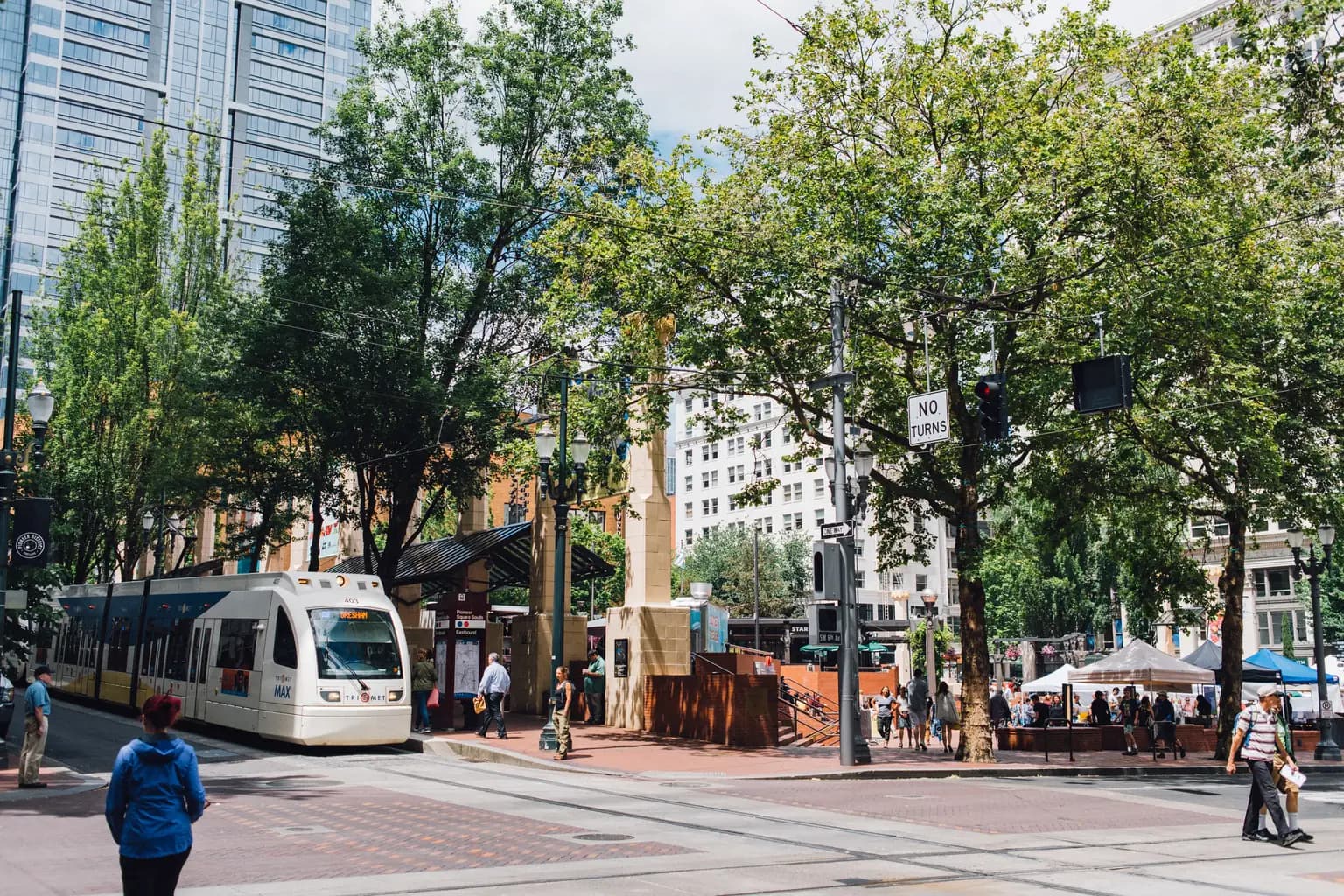
Photo: TriMet, Wikimedia Commons, CC BY 4.0
Downtown has a broad mix of boutique and chain hotels and direct MAX service from the airport. It is convenient for a one-night stay, a front desk, or events at the Portland Art Museum, Arlene Schnitzer Concert Hall and nearby venues. If most of your plans are east-side dinners and nightlife, expect regular river crossings.
Pros
- ✓Broadest concentration of full-service hotels
- ✓Direct MAX service from the airport
- ✓Portland Art Museum, Pioneer Courthouse Square and cultural venues on foot
- ✓Year-round Saturday farmers market at Portland State
Cons
- ✗Street conditions vary by block, especially toward Old Town
- ✗Fewer neighborhood restaurant strips than inner Southeast or Northeast
- ✗Hotel parking often adds a separate charge
- ✗Some blocks are quiet outside event times
Insider Tip
Pick the exact downtown block around your plans. The South Park Blocks work well for museums, Portland State and the Schnitzer; Old Town works for Lan Su Chinese Garden, the waterfront and The Hoxton. Compare full totals for your dates rather than assuming either a hotel or a rental is cheaper.
Northeast Portland & Lloyd: best for Moda Center, conventions and day trips
Beyond Alberta and Mississippi, the wider Northeast has three areas worth knowing. The Lloyd District is the east bank's commercial center: the Moda Center and Veterans Memorial Coliseum at the Rose Quarter, and the Oregon Convention Center at 777 NE Martin Luther King Jr. Blvd, all on the MAX. One change that is new this year: Lloyd Center mall closed for good on 8 August 2026 ahead of redevelopment into housing and open space, so do not plan a shopping afternoon around it; the MAX station keeps the name. Hollywood has the Hollywood Theatre, a movie palace open since July 1926 at 4122 NE Sandy Blvd, and a walkable strip. Irvington is one of the city's prettiest residential neighborhoods, with early-1900s Craftsman homes on tree-lined streets between Broadway and Alberta.
NE's advantage is connections. Several MAX lines and the streetcar's A and B Loops cross it, and I-5 and I-84 are right there, which makes it the easiest base for day trips to the Columbia River Gorge, Mt. Hood and the coast. If you are here for a game, a show or a conference, stay here rather than downtown; the event venues and transit stops are close.
Pros
- ✓Best transit on the east side: several MAX lines plus the streetcar loop
- ✓Closest to the Moda Center, the Coliseum and the Convention Center
- ✓Freeway access for Gorge, Mt. Hood and coast day trips
- ✓Irvington's houses are some of the best in the city
Cons
- ✗The Lloyd blocks are commercial and quiet after dark
- ✗Hollywood has fewer places to eat than the other NE strips
- ✗Further from the SE restaurant corridors
Insider Tip
For the Moda Center or Convention Center, compare Northeast and Lloyd addresses by the walking route to the venue and the full total for your dates. Browse Northeast Portland rentals.
Portland, Oregon
2BR/1BA • Portland Soul Lounge • Walkable Retreat
Portland, Oregon
Alberta Arts District Hideaway - Stylish Studio
Portland, Oregon
New Build Townhome | 3BR / 1BA | Alberta Arts
Portland, Oregon
2BD/2.5BA • Parking • Deck • Luxury Vibes
Where to stay nearby
Start with Hawthorne & Belmont for a longer first trip
Walk to restaurants and shops, then return to a residential side street. Enter dates to compare exact availability and totals.
Two areas to think twice about
Old Town/Chinatown requires an address-level decision. It puts Lan Su Chinese Garden, the waterfront, Saturday Market and several MAX stops close together. It also has more visible street disorder than many visitor neighborhoods. The Hoxton is in Old Town and can make sense for travelers who value its design, transit and central location. Check the current block and the walking routes you expect to use, especially at night, before deciding.
The Lloyd blocks work best for a specific event. The Moda Center and Oregon Convention Center are close, and MAX and streetcar service are useful. Outside an event schedule, the district has fewer places to linger on foot than Alberta, Mississippi or the Central Eastside, so it is less compelling for a longer leisure stay.
When a hotel is the better call
A hotel is often the easier choice for one night, a solo trip, a late arrival, a staffed front desk or an event-focused stay. These four cover distinct locations and room formats. We have no commercial relationship with them; enter your dates on each official site and compare the final total and cancellation terms.
15 NW 4th Ave, in historic Old Town/Chinatown. The hotel's official site lists 119 rooms, a lobby coffee bar and a rooftop restaurant, with the closest MAX stop a short walk away. Rooms are compact, so compare categories carefully.
1001 SW Broadway, beside Arlene Schnitzer Concert Hall and near the Portland Art Museum. This is the most convenient of the four for a downtown performance-focused stay.
100 NE Martin Luther King Jr. Blvd in the Central Eastside. Its mix of private and shared rooms gives solo travelers more formats to compare than a conventional hotel.
900 E Burnside in the Central Eastside. It places you near Buckman and inner-eastside venues while keeping a staffed hotel base.
Insider Tip
Compare the same dates, guest count and cancellation terms. Include parking, cleaning charges and lodging taxes, then use the final checkout total rather than a headline nightly rate.
What a Portland rental costs right now
There is no useful citywide base price: Portland rates move with exact dates, stay length, bedroom count and major events, while cleaning charges and lodging taxes change the final comparison. Enter the same dates and guest count for every option and compare the all-in total before payment.
Insider Tip
For an honest hotel-versus-rental comparison, match sleeping capacity and cancellation terms, then add parking and every mandatory charge. A smaller headline nightly rate does not establish the cheaper stay.
Getting around Portland
Once you are in your neighborhood you will mostly walk. Between neighborhoods: the MAX light rail runs from the airport through the Lloyd District and downtown; the streetcar's NS Line links NW 23rd, the Pearl, downtown and Portland State, and its A and B Loops cross to the Lloyd District, the Central Eastside and OMSI; TriMet buses cover the rest, and the 14 along Hawthorne is the one visitors use most.
An adult TriMet fare is $2.80 and covers 2.5 hours on any bus or MAX. The part visitors rarely know: tap a contactless card or phone and you will never pay more than $5.60 in a day, however many rides you take. Do not buy a day pass; tap the same card every time.
From the airport, the MAX Red Line reaches downtown in about 39 minutes for that same $2.80, with trains most of the day every 15 minutes. A rental car is useful for the Gorge, Mt. Hood or the coast, and unnecessary for the city.
When to visit
June through September is usually the driest stretch; November through March is wetter and shifts more of the trip toward coffee shops, bookstores, restaurants and music venues. Spring and fall can balance greener parks with fewer peak-summer crowds. Lodging demand varies around festivals, games, conventions and school calendars, so use your exact dates rather than a generic booking window.
Insider Tip
Want the neighborhoods as an itinerary? Our Portland neighborhoods tour is two days across Alberta, Hawthorne, Mississippi and the Pearl with matching rentals. First-timers may prefer the Portland weekend itinerary, and families should start with Portland with kids.