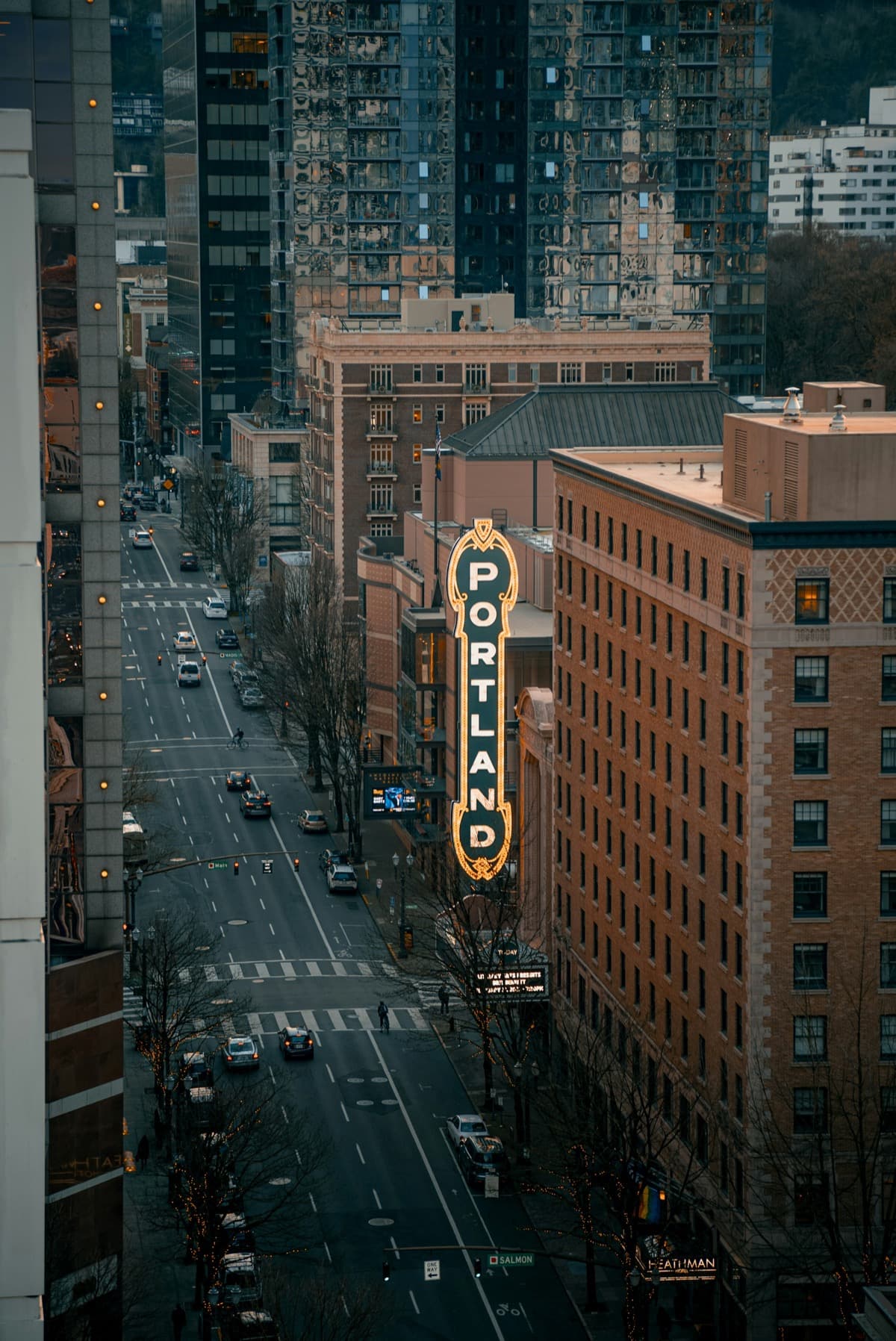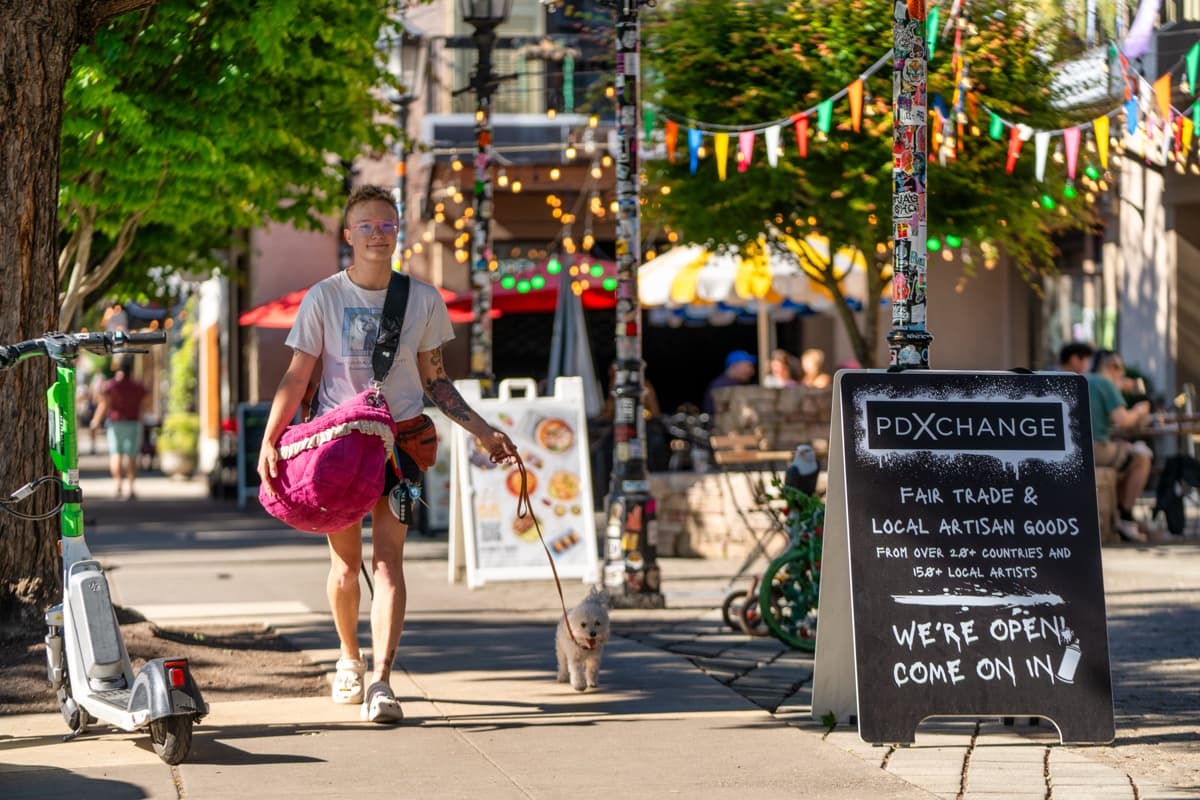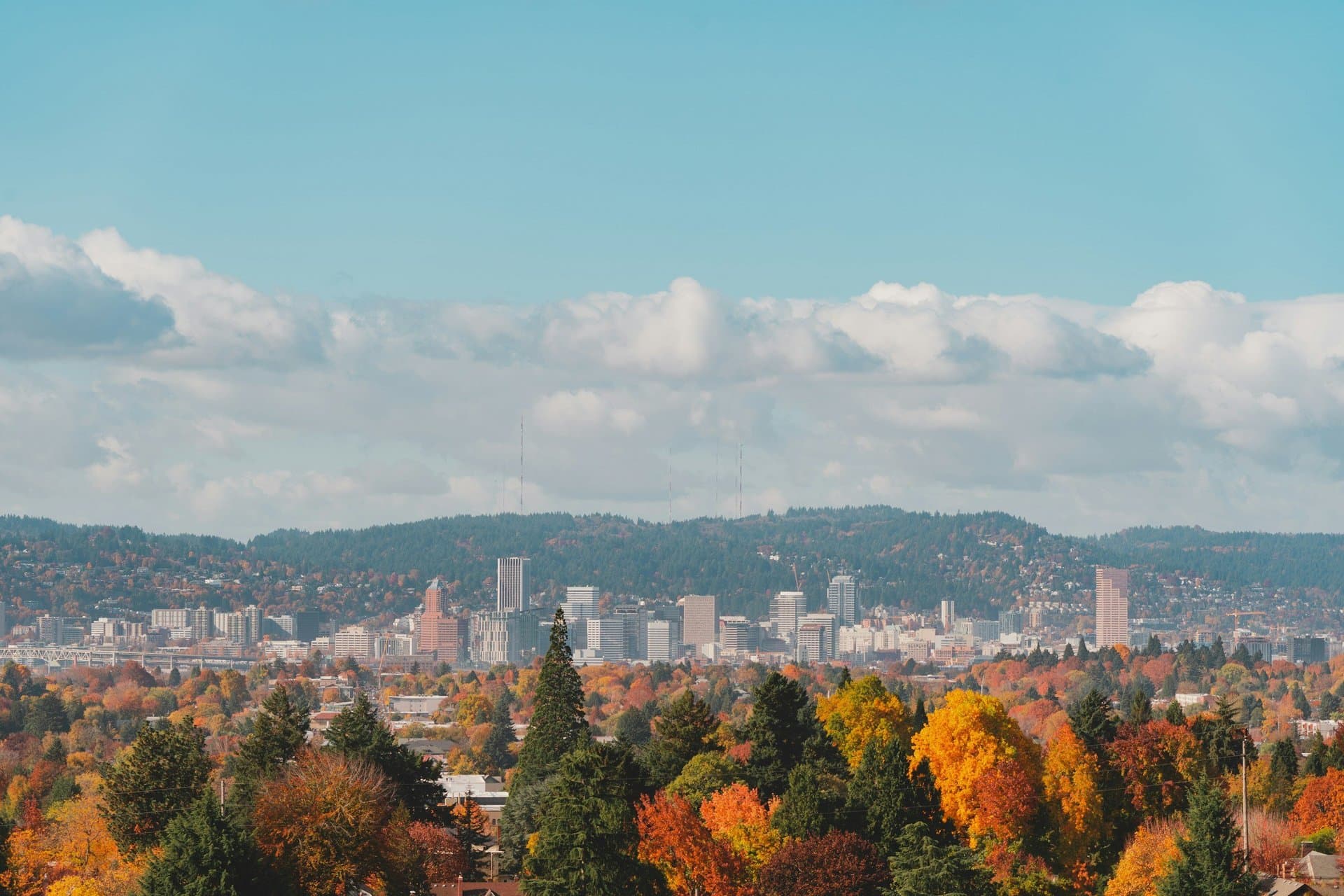
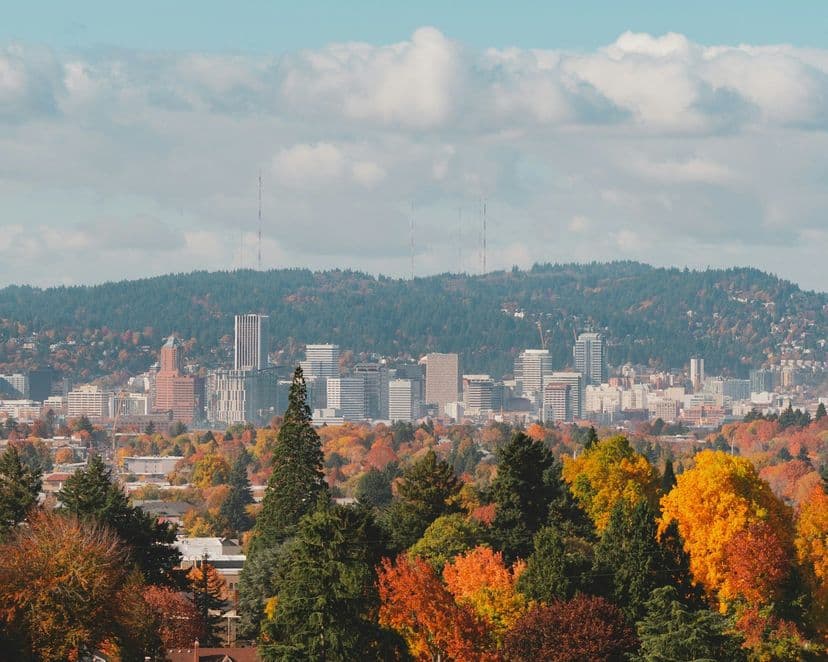
Portland is a city of neighborhoods. Where you stay shapes your entire trip more than any other decision you'll make. Unlike cities where "downtown" is the obvious default, Portland's best food, nightlife, and culture are spread across distinct neighborhoods — each with its own personality, restaurant scene, and walkability. We manage 275+ vacation rentals across all of them, and we've hosted 80,000+ guests. This guide is what we tell everyone who asks us where to stay.
Whether you're weighing Portland hotels against vacation rentals, the neighborhood matters more than the building. A so-so Airbnb on a great block in Hawthorne will give you a better trip than a luxury hotel in a neighborhood that doesn't match your vibe.
Understanding Portland's Layout
Portland is bisected by the Willamette River. Downtown, the Pearl District, and NW Portland sit on the west bank. The east side — where most locals live, eat, and drink — is home to the majority of the city's restaurant, bar, and nightlife scene. Portland is divided into five quadrants (N, NE, NW, SE, SW) plus the newer South Waterfront. Street addresses include the quadrant, so always check whether that "Portland restaurant" is in SE or NW — they could be 30 minutes apart.
The good news: Portland's transit system — the MAX light rail, streetcar, and buses — connects most neighborhoods, and ride-sharing fills the gaps. An Uber from SE to NW rarely costs more than $15. Most neighborhoods on this list are compact enough to explore entirely on foot once you're there.
Hawthorne & Belmont: Portland's Culinary Heartbeat
If you only have a few days in Portland and want to maximize your restaurant and nightlife experience, stay in Hawthorne. This is the city's culinary and cultural epicenter. Hawthorne Boulevard has more independently owned businesses per block than almost anywhere in Portland — vintage clothing, record stores, bookshops, and restaurants at every turn. Division Street, one block south, is the newer restaurant corridor with James Beard-recognized spots packed into a few blocks. Belmont runs parallel and is quieter, with neighborhood coffee shops and standout brunch spots.
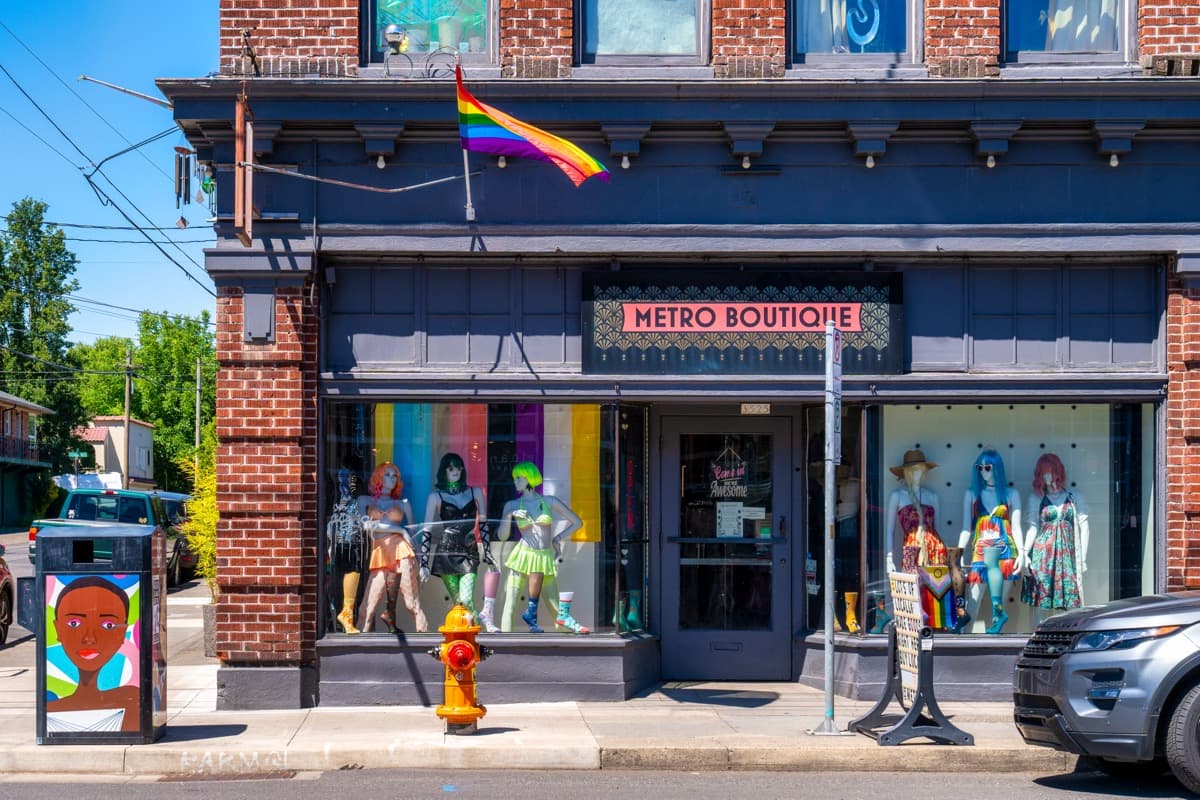
The sub-neighborhoods each have a distinct feel. Hawthorne is the classic — a long commercial strip where you can walk for 30 minutes without running out of things to discover. Division Street is destination dining: Ava Gene's, Langbaan, and a dozen other spots. Belmont is the quieter sibling with great coffee and brunch. Clinton and Richmond, a block or two off the main corridors, offer tree-lined residential streets — walkability without noise. Further south, Foster-Powell is Portland's emerging neighborhood with lower nightly rates and a growing food cart scene.
Pros
- ✓Walking distance to 50+ restaurants and bars
- ✓Free street parking on most residential blocks
- ✓Best food cart pods in the city
- ✓Easy access to Mt. Tabor Park trails
- ✓Strong coffee shop scene (Heart, Coava, Proud Mary)
Cons
- ✗Hawthorne Blvd can get busy on weekend evenings
- ✗Limited hotel options — vacation rentals dominate
- ✗20-minute bus ride to downtown (or $10 Uber)
- ✗Some streets lack sidewalks south of Division
Insider Tip
Hawthorne is our most-booked area for good reason. Nightly rates for a 2-bedroom house with parking typically start around $150-200/night — less than a single downtown hotel room. Browse Hawthorne & Belmont rentals.
Alberta Arts District: Murals, Galleries & Last Thursday
Alberta is Portland's most visually striking neighborhood. Nearly every building on Alberta Street features a mural, and the energy swings between gallery openings, food cart pods, and live music. The anchor event is Last Thursday (May through September), when the street closes to traffic and fills with artists, performers, food vendors, and thousands of people — it's Portland's best recurring street party and worth planning a trip around.
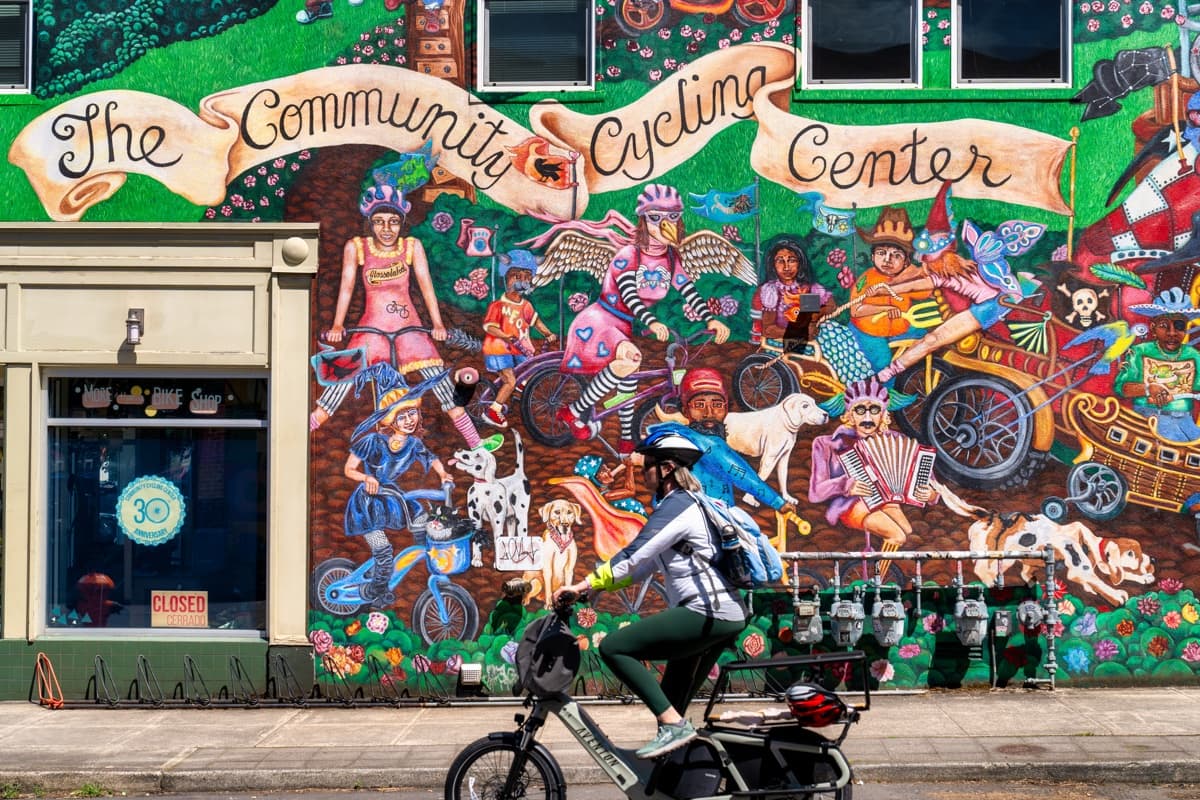
Beyond the art scene, Alberta has excellent restaurants (Tin Shed, Pine State Biscuits, Yonder), some of the city's best ice cream (Salt & Straw), and a walkable commercial strip that stays lively without feeling crowded. The residential streets surrounding Alberta are classic Portland — Craftsman homes, mature trees, front-porch culture. It's a great neighborhood for travelers who want to feel like they're living in Portland, not visiting it.
Pros
- ✓Best street art and gallery scene in Portland
- ✓Last Thursday street fair (May-Sept) is unmissable
- ✓Excellent walkability along Alberta Street
- ✓Free residential parking everywhere
- ✓Strong food cart and brewery presence
Cons
- ✗No MAX or streetcar — bus or rideshare to other areas
- ✗Limited nightlife compared to SE or Mississippi
- ✗Some blocks transition quickly from commercial to quiet residential
Insider Tip
Alberta properties tend to book early for summer months, especially around Last Thursday dates. Our Alberta rentals are mostly 2-3 bedroom houses perfect for groups. See Alberta Arts District rentals.
NW 23rd & Nob Hill: Shopping, Dining & Forest Park
Northwest Portland — specifically the Nob Hill and Alphabet District — is Portland's most polished neighborhood. NW 23rd Avenue is a walkable corridor of boutiques, brunch spots, and upscale restaurants. NW 21st runs parallel with more local gems. And just blocks west, Forest Park's 5,200 acres of trails begin — making NW Portland the rare neighborhood where you can have dinner at a world-class restaurant and hike through old-growth forest before breakfast.
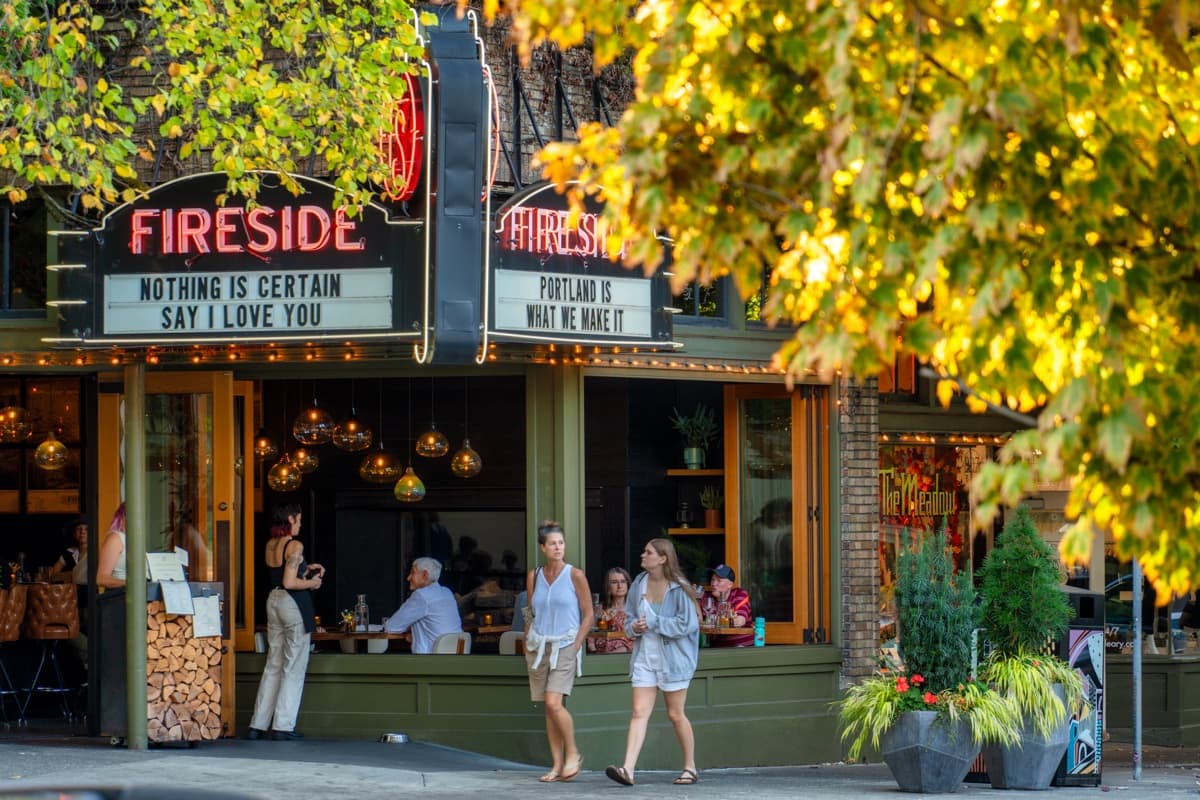
The residential streets of Nob Hill are among the most beautiful in the city — large Victorian and Craftsman homes on tree-lined blocks. This is where Stay Portland's Pomeroy building sits: boutique hotel-style suites with full kitchens, right in the heart of the NW walkable zone. Other NW rentals put you on quiet streets within a 5-minute walk of NW 23rd, Forest Park trailheads, and the Pearl District.
Pros
- ✓Most walkable shopping/dining corridor in Portland
- ✓Forest Park trailheads within walking distance
- ✓Beautiful residential architecture
- ✓Streetcar access to Pearl District and downtown
- ✓Excellent brunch scene (Besaws, Stepping Stone, Lovejoy Bakers)
Cons
- ✗Tightest parking in the city — meters and permit zones
- ✗Higher nightly rates than east side neighborhoods
- ✗Can feel more tourist-oriented than SE or Alberta
Insider Tip
Parking is the biggest challenge in NW. Book a property with dedicated parking if you're driving. Our Pomeroy suites include parking and put you steps from NW 23rd. See Northwest Portland rentals or The Pomeroy.
Pearl District: Powell's, Galleries & Urban Living
The Pearl District is Portland's most urban neighborhood — converted warehouses, high-end galleries, and some of the city's best restaurants packed into a walkable grid. Powell's City of Books, the world's largest independent bookstore, anchors the neighborhood. Tanner Springs Park provides a green oasis. The Portland Streetcar runs through the Pearl, connecting you to downtown and NW Portland without needing a car.
The Pearl is where Portland's hotel and restaurant scene overlap most directly. You'll find the highest concentration of hotels here and downtown, alongside restaurants like Canard, Mediterranean Exploration Company, and Oven & Shaker. The neighborhood has a polished, urban feel — this is Portland's answer to SoHo or the West Loop. It's great for visitors who want walkability, culture, and dining density without needing to explore further afield.
Pros
- ✓Powell's City of Books and First Thursday gallery walks
- ✓Highest restaurant density on the west side
- ✓Streetcar + MAX access — no car needed
- ✓Walking distance to downtown events and waterfront
Cons
- ✗Most expensive area — hotels and rentals both cost more
- ✗Parking is metered and valet-only at many buildings
- ✗Less "Portland weird" — more polished and chain-adjacent
- ✗Borders Old Town, which has visible homelessness
Insider Tip
The Pearl works best for short stays (1-2 nights) when you want to be close to downtown. For longer stays, the east side neighborhoods offer more space and character for less money. See Pearl District rentals.
Mississippi Avenue: Music, Food Carts & Craft Beer
Mississippi Avenue has evolved from a quiet residential strip into one of Portland's most popular commercial corridors. The walk from Prost! (German-style beer hall) to Mississippi Studios (one of the best small music venues on the West Coast) takes five minutes, with a dozen excellent stops in between — Lovely's Fifty Fifty pizza, StormBreaker Brewing, and a rotating cast of food carts. It's compact, walkable, and has a curated feel without being precious.
The residential streets around Mississippi are classic NE Portland — modest bungalows with big yards, mature trees, and a neighborhood feel that disappears as soon as you step off the main drag. It's one of the best areas for travelers who want a genuine neighborhood experience with world-class dining within walking distance.
Pros
- ✓Mississippi Studios for live music
- ✓Excellent food cart pod and breweries
- ✓Walkable main strip with neighborhood quiet on side streets
- ✓Easy I-5 access for day trips to the coast or gorge
- ✓Free residential parking
Cons
- ✗Very few hotels — vacation rentals are the main option
- ✗Compact commercial strip — less to explore on foot than Hawthorne
- ✗Can get crowded on weekend evenings
Insider Tip
Mississippi is close to both Alberta (10 min walk) and the Lloyd District MAX station (10 min bus). It's a great central NE base. Browse Mississippi Avenue rentals.
Division & Clinton: Portland's Restaurant Row
Division Street between SE 20th and SE 50th is Portland's densest restaurant corridor. This is where the city's culinary innovation happens — Ava Gene's, Langbaan, Pok Pok (now closed but its legacy spawned a dozen neighbors), and newcomers that change with the seasons. Clinton Street, running parallel one block south, is quieter and more residential with the iconic Clinton Street Theater, which has hosted Rocky Horror Picture Show screenings since the 1970s.
This area overlaps with what locals call "inner SE" — between Hawthorne to the north and Woodstock to the south. Richmond and Foster-Powell are nearby sub-neighborhoods with lower prices and a growing food and drink scene. The area is well-connected by bus but is primarily a walking and biking neighborhood — the Springwater Corridor trail runs nearby for longer rides.
Pros
- ✓Best restaurant density in Portland per block
- ✓Quieter residential streets than Hawthorne
- ✓Free parking on almost every street
- ✓Close to Ladd's Addition (Portland's oldest planned neighborhood)
Cons
- ✗Division can feel like a construction zone — new buildings going up
- ✗Less nightlife than Hawthorne or Alberta
- ✗Further from MAX light rail
Sellwood-Moreland: Antiques, River Trails & Family-Friendly Calm
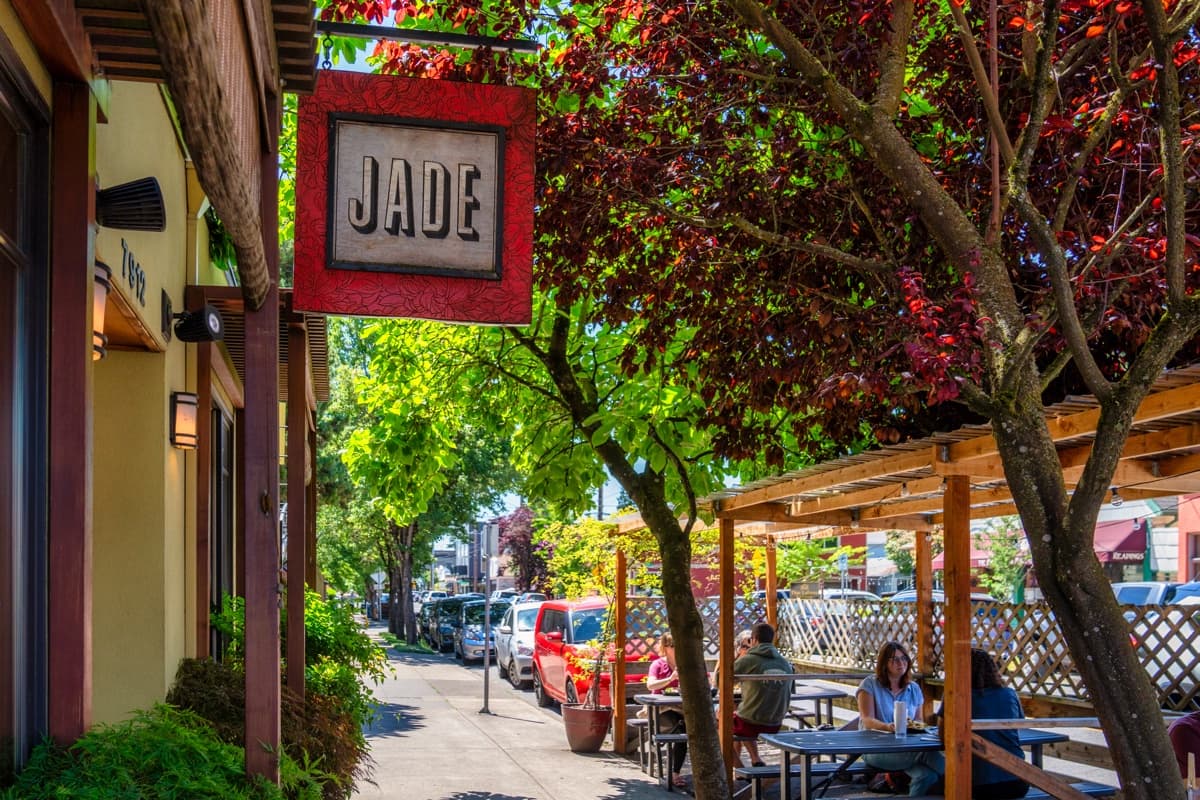
Sellwood-Moreland is Portland's antiques capital and one of its most family-friendly neighborhoods. Antique Row on SE 13th Avenue has a dozen shops packed into a few blocks. Sellwood Riverfront Park connects to the Springwater Corridor trail for miles of riverside walking and biking. The neighborhood has a quieter, almost small-town feel — families and dog-walkers outnumber bar-hoppers — but it's still just 15 minutes from the heart of SE Portland.
Pros
- ✓Quietest neighborhood on this list — ideal for families
- ✓Antique Row is a unique Portland experience
- ✓Riverfront trail access for running, biking, dog walking
- ✓Free parking everywhere
- ✓Lower nightly rates than inner SE or NW
Cons
- ✗Further from the action — 15-20 min to Hawthorne by bus or car
- ✗Limited nightlife and late-night dining
- ✗No MAX access — bus or rideshare to other neighborhoods
Insider Tip
Sellwood properties are some of our most popular with families and guests traveling with dogs. Fenced yards are common. Browse Sellwood-Moreland rentals.
St. Johns & North Portland: Cathedral Park & Local Charm
North Portland feels like a small town inside a city. The St. Johns neighborhood centers around a main street with locally owned shops, restaurants, and one of Portland's best brewery clusters. Cathedral Park — beneath the gothic arches of the St. Johns Bridge — is one of the most photographed spots in Oregon. Overlook has panoramic views of downtown, Mt. Hood, and Mt. St. Helens on clear days. Kenton has the iconic Paul Bunyan statue and a growing restaurant scene on Denver Avenue.
North Portland is less touristy, more affordable, and deeply authentic. If you want Portland without the polish — real neighborhoods where your neighbors are locals, not other tourists — this is it. It's also the closest area to Forest Park's northern trailheads and a straight shot to Sauvie Island (berry farms, beaches, bird-watching, 20 minutes from St. Johns).
Pros
- ✓Most affordable nightly rates in Portland
- ✓Cathedral Park and St. Johns Bridge are stunning
- ✓Strong local restaurant and brewery scene
- ✓MAX Yellow Line through Overlook to downtown
- ✓Close to Forest Park and Sauvie Island
Cons
- ✗Furthest from SE Portland's restaurant scene
- ✗St. Johns can feel isolated from the rest of the city
- ✗Fewer dining options per block than inner neighborhoods
Insider Tip
North Portland is our recommendation for budget-conscious travelers who still want a great neighborhood experience. Nightly rates are typically 20-30% lower than Hawthorne or NW. Browse North Portland rentals.
Downtown Portland: Convenient, But Know What to Expect
We're going to be honest here because other guides aren't: downtown Portland has had a rough few years. The pandemic hit hard, some storefronts are still vacant, and visible homelessness is concentrated in parts of downtown — particularly Old Town/Chinatown and the northern blocks near the Greyhound station. That said, downtown has been improving through 2025-2026. Pioneer Courthouse Square, the Portland Art Museum, and the south end of downtown (near PSU and the South Park Blocks) feel active and safe. If you need to be near the Convention Center, Moda Center, or want the easiest airport MAX connection, downtown delivers.
Downtown also has the highest concentration of Portland hotels — this is where the boutique properties (Sentinel, Hotel deLuxe, Heathman) and major chains (Hilton, Marriott, Hyatt) cluster. For visitors who prefer a traditional hotel experience with a concierge, valet parking, and room service, downtown is the most practical base. Just know that Portland's best restaurants and nightlife are across the river in SE and NE — you'll Uber to dinner most nights.
Pros
- ✓Best hotel selection in Portland
- ✓Direct MAX to airport (40 min, $2.80)
- ✓Walking distance to Portland Art Museum, Pioneer Square, waterfront
- ✓PSU Farmers' Market (Saturdays, Mar-Dec) is one of the best in America
- ✓Convention Center and Moda Center nearby (MAX or short Uber)
Cons
- ✗Visible homelessness, particularly in Old Town and northern blocks
- ✗Restaurant and bar scene is weaker than SE, NE, or NW
- ✗Hotel parking runs $35-50/night
- ✗Can feel quiet at night outside of event times
- ✗Most downtown hotels charge $25-40 daily amenity fees
Insider Tip
If you stay downtown, stick to the southern half — between Pioneer Courthouse Square and Portland State University. Avoid Old Town/Chinatown for lodging. And consider whether a vacation rental in Hawthorne or NW (15 min away) might give you a better Portland experience for the same price.
Northeast Portland: Lloyd District, Hollywood & Irvington
Beyond Alberta and Mississippi, the broader Northeast Portland area includes several neighborhoods worth considering. The Lloyd District is Portland's secondary commercial center — home to the Moda Center (Trail Blazers, concerts), Lloyd Center, and the Oregon Convention Center. It has direct MAX access and is the most transit-connected neighborhood after downtown. Hollywood has the iconic Hollywood Theatre (a 1926 movie palace showing indie and classic films) and a walkable commercial strip. Irvington is one of Portland's most beautiful residential neighborhoods — Craftsman homes from the early 1900s on tree-lined streets, with easy access to both Alberta and Broadway.
NE Portland's biggest advantage is connectivity. The MAX has multiple stops throughout the area, and I-5 and I-84 access make it the easiest base for day trips to the Columbia River Gorge, Mt. Hood, and the Oregon Coast. If you're planning to explore beyond Portland, NE is strategically well-positioned.
Pros
- ✓Best transit connections on the east side (multiple MAX lines)
- ✓Closest to Moda Center, Convention Center, and Lloyd Center
- ✓Easy freeway access for day trips (Gorge, Coast, Mt. Hood)
- ✓Irvington has some of Portland's most beautiful homes
- ✓More affordable than NW or Pearl, better connected than North
Cons
- ✗Lloyd District is commercial — less neighborhood charm
- ✗Hollywood has fewer dining options than other NE areas
- ✗Further from SE Portland's restaurant corridor
Insider Tip
If you're attending an event at Moda Center or the Convention Center, staying in NE Portland is far more practical than downtown — and usually half the price. Browse Northeast Portland rentals.
Portland Hotels vs. Vacation Rentals: How to Choose
Portland has solid boutique hotels downtown and in the Pearl, but the city's best experiences are in its residential neighborhoods — places most hotels haven't reached. A vacation rental puts you on a real Portland street, with a full kitchen, laundry, outdoor space, and room for your group. Stay Portland properties offer hotel-quality linens, professional cleaning, and 24/7 guest support — with the neighborhood immersion and space that hotels can't match.
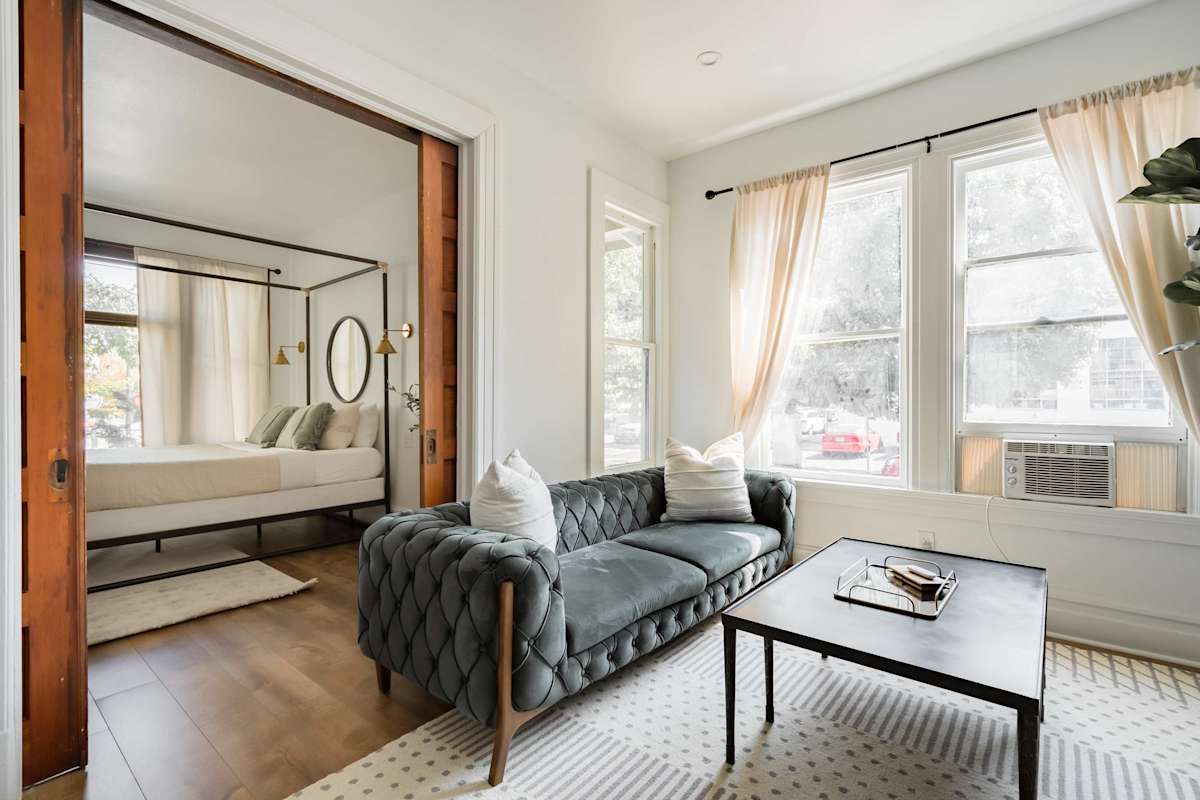
The price comparison often surprises visitors. For the cost of a single downtown hotel room ($200-350/night plus $35-50 parking and $25-40 amenity fees), you can typically book a full two-bedroom house in Hawthorne or Alberta — with a backyard, free parking, and a kitchen that saves you from eating every meal out. For larger groups, the math is even more compelling: a 4-bedroom Portland vacation rental can sleep 8-10 guests for the price of 2 hotel rooms.
Hotels make sense for one-night stays, business travel where the company is paying, or if you specifically want concierge services and valet parking. For everything else — families, friend groups, extended stays, couples who want to cook — a vacation rental wins on value, space, and location.
Getting Around Portland
Portland is one of the most walkable and bikeable cities in America. Once you're in your neighborhood, you probably won't need a car. The MAX light rail runs from the airport through downtown, the Pearl, Lloyd District, and into east Portland. The Portland Streetcar loops through NW Portland and the Pearl. TriMet buses cover the rest — the #14 Hawthorne and #72 Killingsworth are two of the most useful routes for visitors. Ride-sharing (Uber and Lyft) is affordable — a ride from SE to NW rarely costs more than $15.
If you're flying in, a rental car is useful for day trips to the Columbia River Gorge, Mt. Hood, or the Oregon Coast — but it's unnecessary for exploring the city itself. The MAX Red Line runs directly from PDX airport to downtown in about 40 minutes for $2.80.
When to Visit Portland
Portland's peak season runs June through September, when the weather is warm, dry, and reliably sunny. This is when nightly rates are highest and properties book furthest in advance. July and August are the busiest — expect to book 2-3 months ahead for popular neighborhoods. The Rose Festival (late May through mid-June) and Oregon Brewers Festival (late July) also drive demand.
The shoulder seasons (April-May, September-October) are our favorite time to recommend Portland. The city is green and vibrant, nightly rates drop 20-30%, and you'll have restaurants to yourself. Winter (November-March) is Portland's rainy season — gray and drizzly, but also when nightly rates are lowest and the food and drink scene is just as strong. Portland is fundamentally an indoor city in winter: coffee shops, breweries, restaurants, bookstores, and live music venues thrive year-round.
Insider Tip
Book direct with Stay Portland to save up to 15.5% vs. Airbnb or VRBO. Same properties, no service fees, local support 24/7. Browse all 275+ properties.